Year-End Bookkeeping Checklist for Small Businesses
As the year comes to a close, many small business owners feel the pressure of unfinished bookkeeping tasks, unanswered questions, and the looming stress of tax season. A clean year-end close is not just about compliance. It’s about clarity, confidence, and starting the new year without financial guesswork.
This year-end bookkeeping checklist for small businesses walks you through the essential steps to close your books properly and avoid unnecessary headaches later.

Year-end bookkeeping isn’t just a box to check.
It directly impacts:
- How smoothly your tax filing goes
- Whether your financial reports are accurate
- Your ability to plan for the upcoming year
- How confident you feel about your business finances
Messy books at year-end often lead to rushed cleanups, delayed tax filings, and costly mistakes. Taking the time to close your books correctly now saves time, money, and stress later.
Why Year-End Bookkeeping Matters More Than You Think
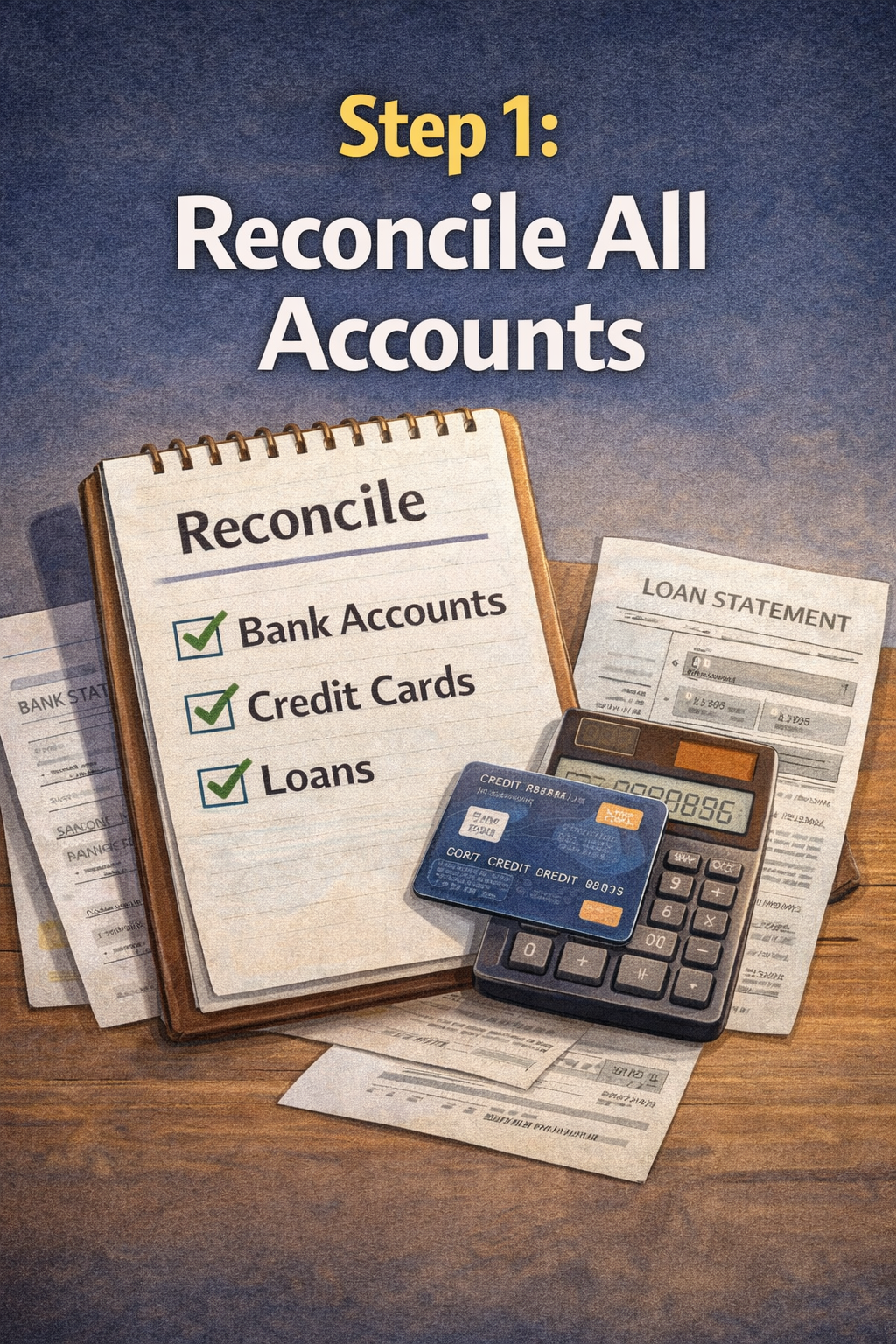
Reconciling ensures that what’s in your accounting software matches what actually happened in real life. At year-end, every account should be reconciled, including:
Bank Accounts
Make sure all deposits and withdrawals match your bank statements. Any differences should be identified and resolved.
Credit Cards
Unreconciled credit cards are a common source of errors. Confirm all charges are recorded and categorized correctly.
Loans
Verify loan balances, interest payments, and principal reductions so your balance sheet reflects accurate debt totals.
If accounts aren’t reconciled, your reports cannot be trusted.
Step 1: Reconcile All Accounts
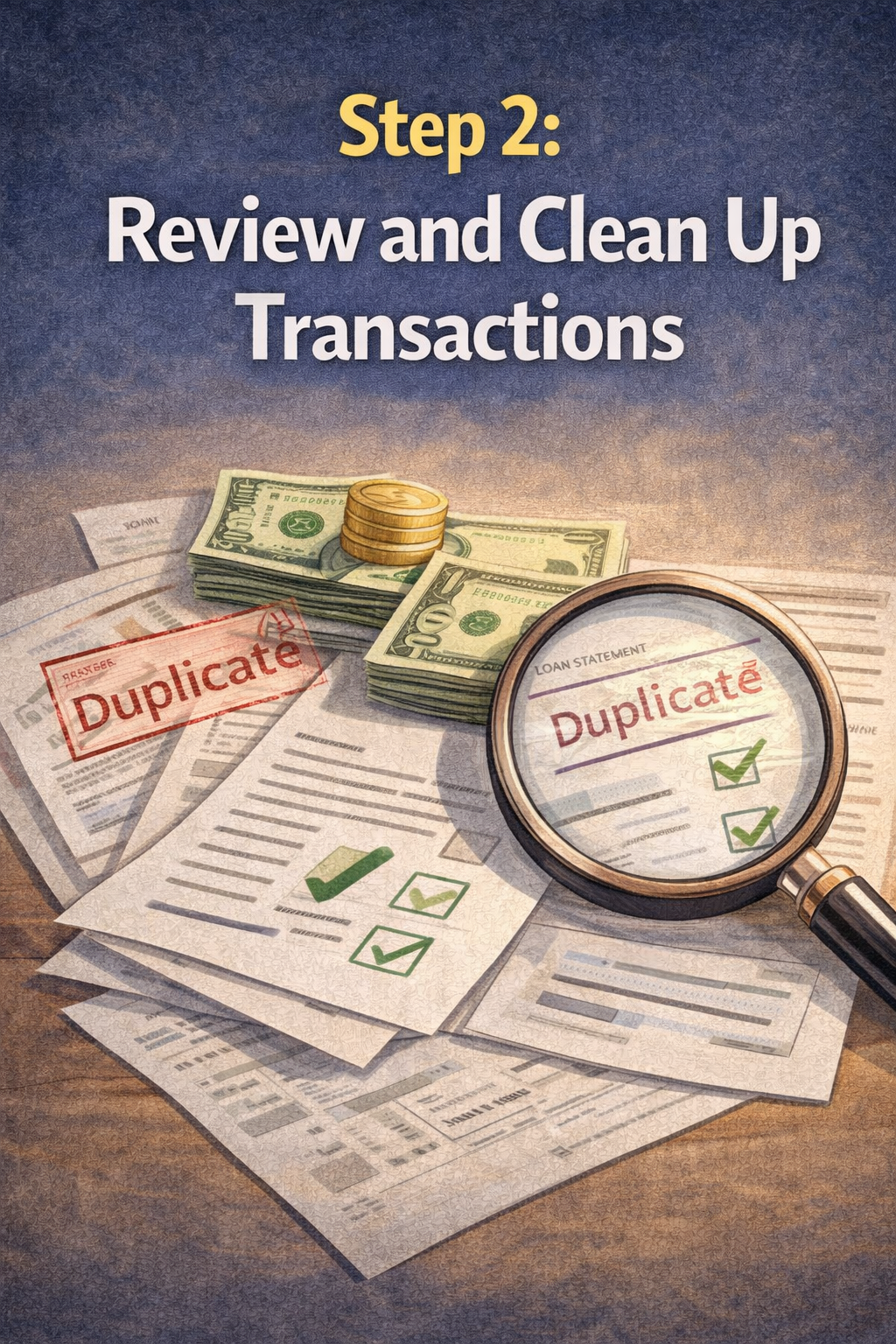
Next, take a close look at your transactions.
At this stage, you should:
- Check for duplicate entries
- Look for uncategorized or miscategorized transactions
- Remove personal expenses that don’t belong in the business
- Confirm income is recorded in the correct period
This cleanup step is critical. Small errors throughout the year compound into big problems at tax time.
Step 2: Review and Clean Up Transactions
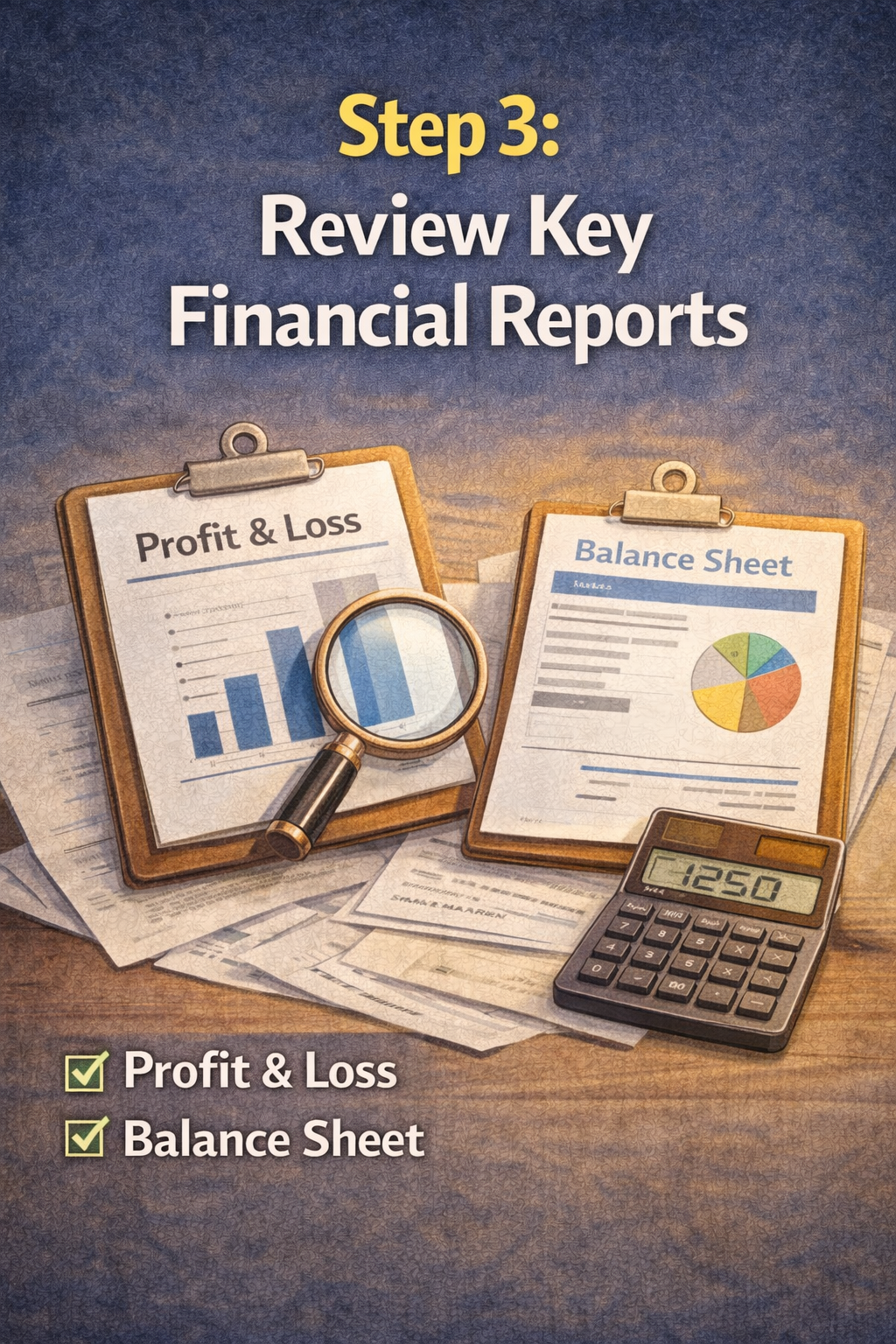
Step 3: Review Key Financial Reports
Once transactions are cleaned up, review your core reports.
Profit & Loss Statement
Your Profit & Loss shows how your business performed over the year. Look for:
- Unusual spikes or drops in income
- Expenses that seem too high or too low
- Categories that may need reclassification
Balance Sheet
Your Balance Sheet shows what your business owns and owes.
Confirm:
- Bank and credit card balances are accurate
- Loan balances match lender statements
- Owner equity looks reasonable
If these reports don’t make sense, it’s a sign more cleanup is needed.
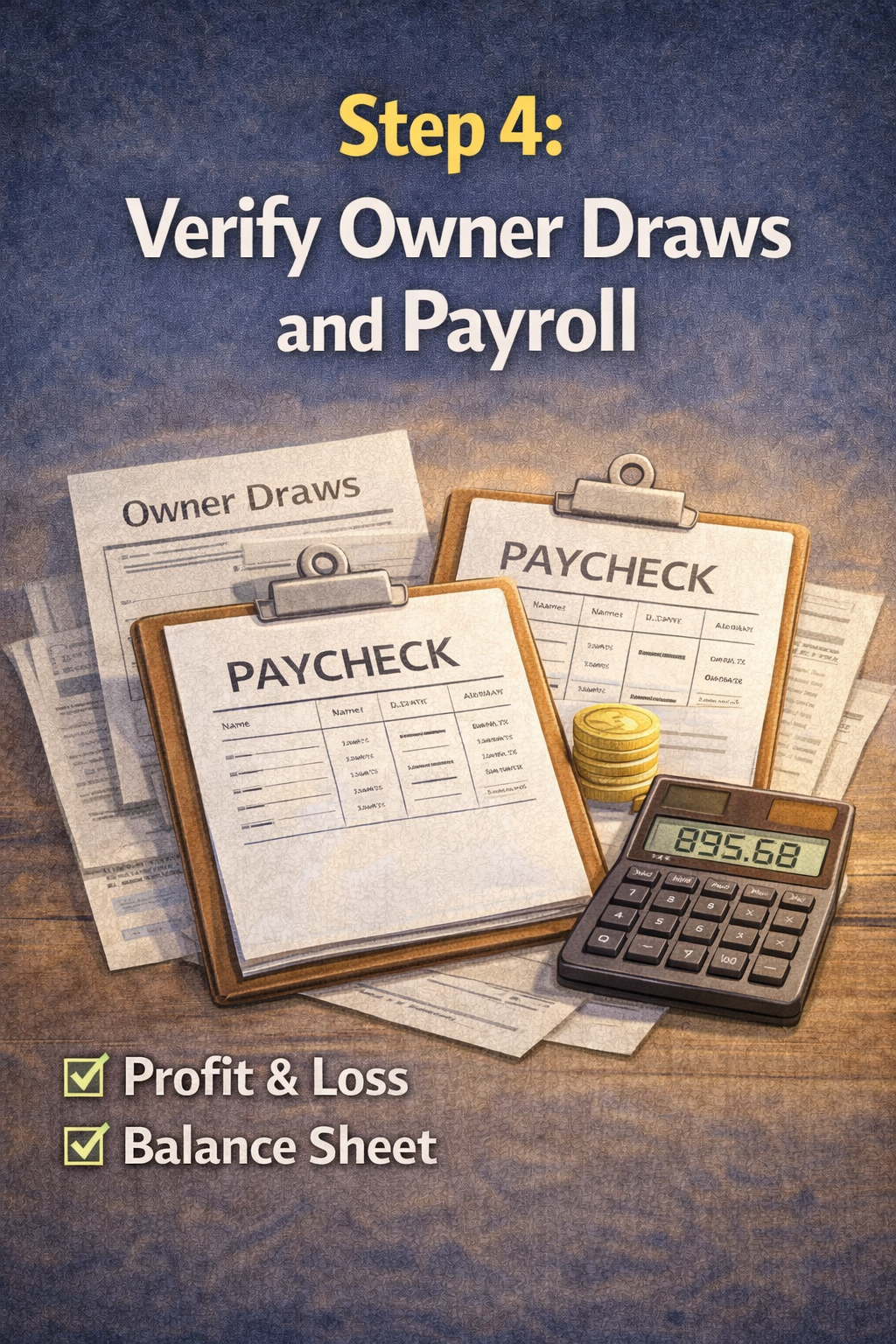
Owner compensation errors are one of the most common year-end issues.
Be sure to:
- Confirm owner draws are recorded correctly
- Separate personal and business transactions
- Review payroll reports for accuracy
- Ensure payroll liabilities are properly recorded
Incorrect owner or payroll entries can create tax issues and distort your financial picture.
Step 4: Verify Owner Draws and Payroll
Common Year-End Bookkeeping Mistakes to Avoid
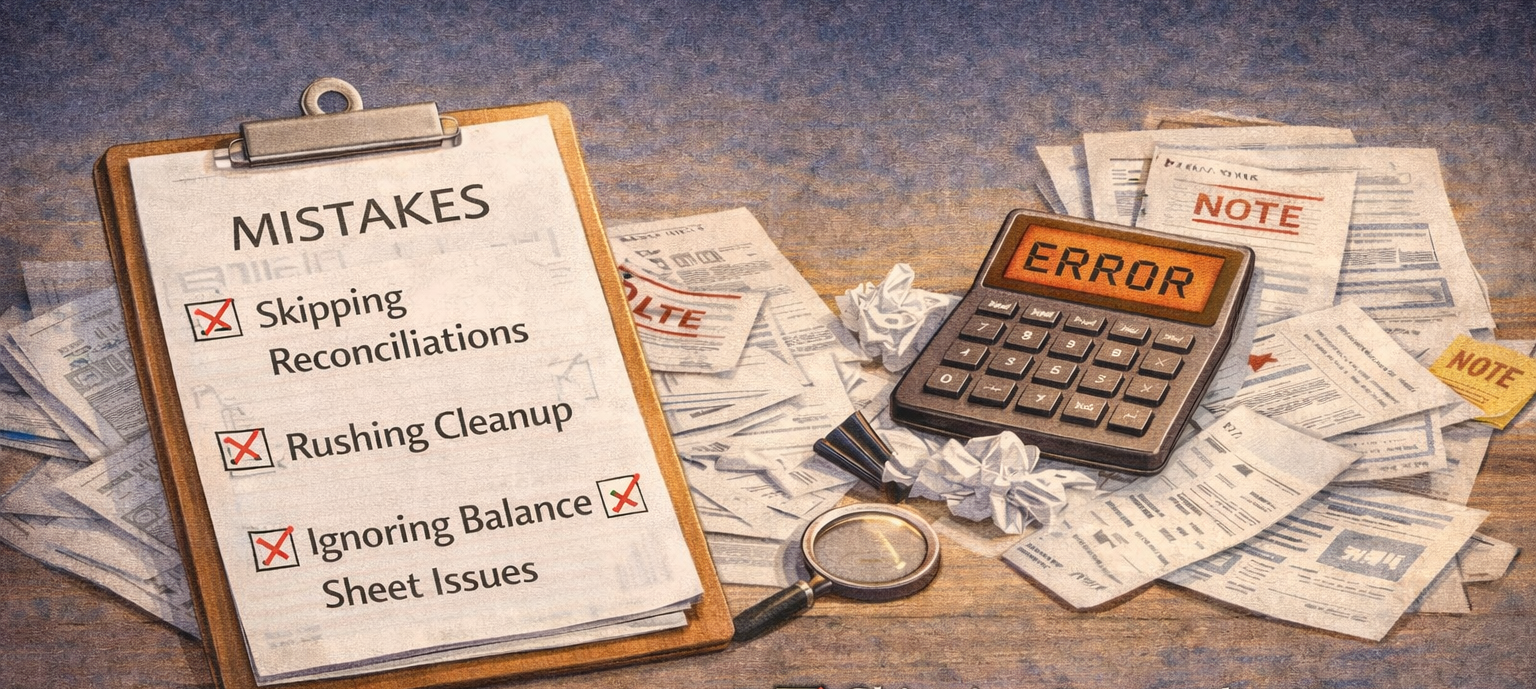
Many small business owners run into trouble by:
- Skipping reconciliations
- Rushing through cleanup just to “get it done”
- Ignoring balance sheet issues
- Waiting until tax time to fix problems
- Assuming software automatically gets everything right
Avoiding these mistakes now prevents bigger, more expensive fixes later.
When to Use Catch-Up & Clean-Up Bookkeeping
If you’re behind, unsure about your numbers, or overwhelmed by the process, year-end is the right time to get help.
Catch-up and clean-up bookkeeping is ideal when:
- Your books haven’t been reconciled regularly
- Transactions are miscategorized or missing
- Reports don’t look right
- You want peace of mind before tax season
A professional cleanup ensures your books are accurate, compliant, and ready for whatever comes next.
You don’t have to tackle year-end bookkeeping alone. If this checklist feels overwhelming or you’re not confident your books are clean, Catch-Up & Clean-Up Bookkeeping can take this off your plate and get everything back on track.
👉 Schedule a discovery call and start the new year with clear, accurate financials.
Ready for Clean Books and a Stress-Free New Year?